MPI follows the GRI Standards to analyze the level of stakeholder concern and the operational impact of various issues. Through this process, we identify key material topics and establish management approaches and performance indicators accordingly. Material topics are deliberated by the ESG Task Force and reviewed by the ESG Committee to ensure that operational decisions at all stages are aligned with the company’s sustainable development objectives.

The implementation status of risk management for the 2025 material topics was reported to the Board of Directors on August 13, 2026. The Board reviewed and approved the implementation results and agreed to continue the subsequent initiatives to strengthen sustainability governance mechanisms and overall risk management effectiveness.

Understanding Organizational Context


Selection of Concerned Issues

In the initial assessment year, MPI conducted a comprehensive review of key issues of concern within domestic and international industries. These issues were consolidated and finalized as MPI’s sustainability development topics following deliberation and approval by the ESG Committee.

Determination of Stakeholder Groups and Communication Methods

MPI identified stakeholders with significant influence on the company’s operations and sustainability strategies. In the initial assessment year, stakeholder engagement on ESG-related topics primarily relied on proactive communications from stakeholders through various channels, including official correspondence, surveys, audits, on-site visits, telephone communications, meetings, opinion boxes, and dedicated email contacts, serving as the main channels for internal and external topic-related communication.

Identification of Actual and Potential Impacts


Identification and Analysis of Current Risk

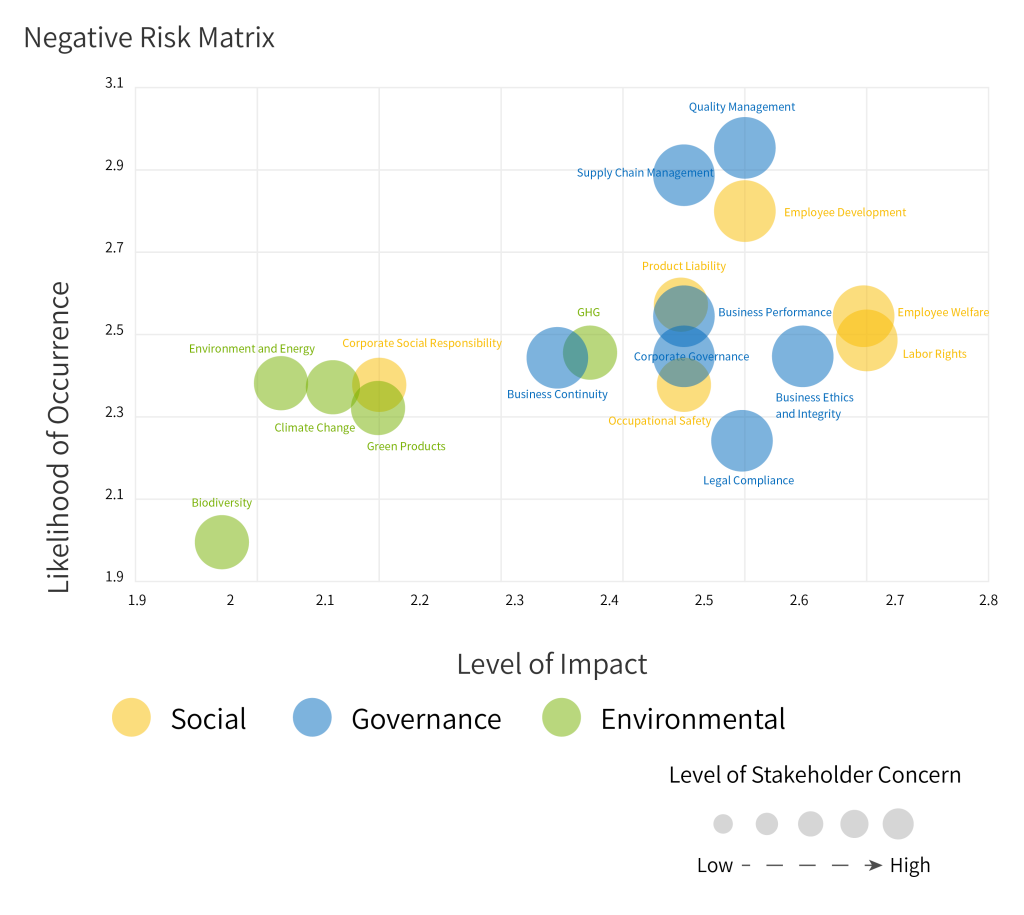
ESG risk analysis was conducted on all departments in the year, and the risk level and operational impact of each issue of each year were determined based on the “likelihood” and “external impact” of risks.

Identification of Actual and Potential Impacts 

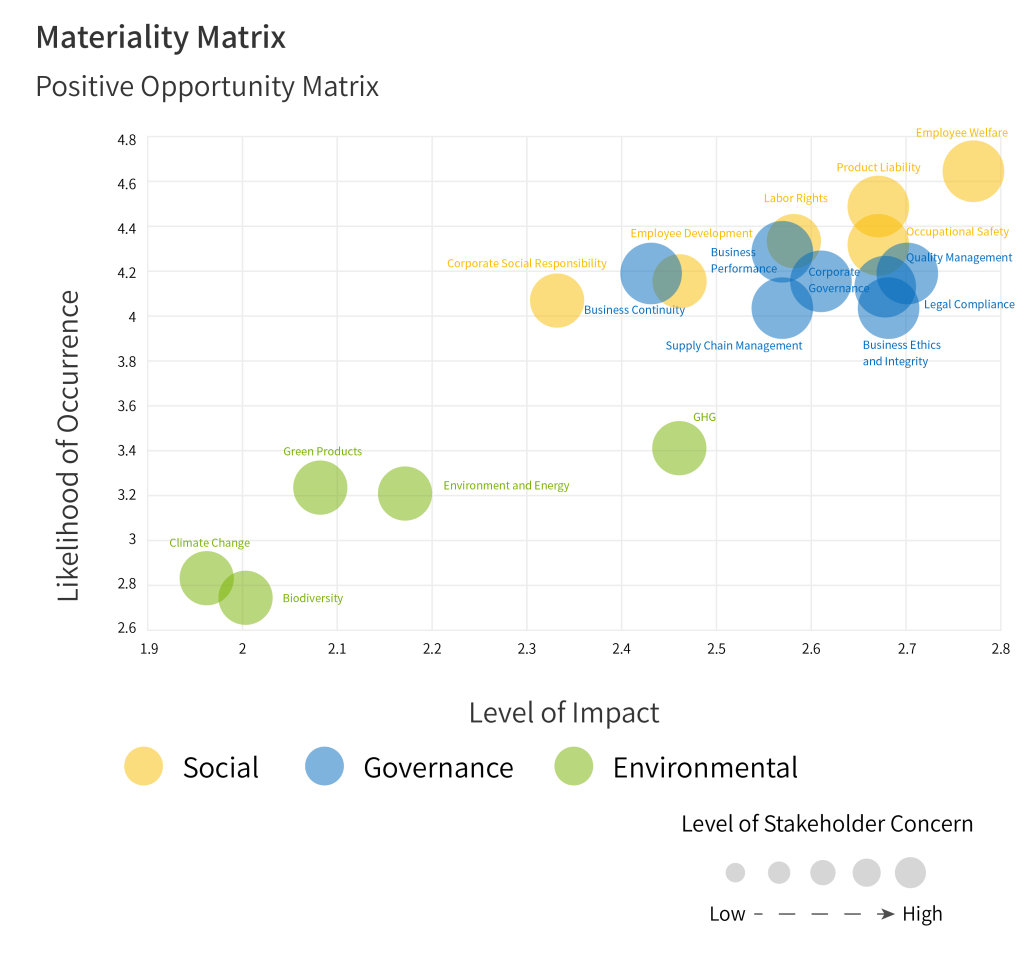
Based on stakeholder concerns and by integrating both internal and external topics, MPI provides an assessment of the actual and potential positive and negative impacts associated with each material topic.

Assessment of Impact Significance


Analysis of Actual and Potential Impacts 

The “operational impact” and “impact likelihood” were judged based on the results of ESG risk identification, the tension of issues that concerned stakeholders, and impact description, and the tension of concerned issues (general, high, prioritized) was determined.

Prioritization of Most Significant Impacts
Determining Priority Reporting Order

Determination of Material Topics 

Based on the frequency and importance of issues raised by stakeholders, topics classified as “priority concerns” are identified and designated as MPI’s material topics.

Setting Management Approaches

For each material topic, management approaches are defined and implemented by the responsible departments to ensure effective execution and alignment with MPI’s sustainability objectives.

Selection of Concerned Issues and Material Topics


Environmental
No.Concerned IssueMaterial Topic
1Green Products
2Environment and Energy
3GHG
4Biodiversity
5Climate Change
Social
No.Concerned IssueMaterial Topic
6Labor RightsV
7Employee DevelopmentV
8Occupational SafetyV
9Employee WelfareV
10Corporate Social Responsibility
11Product LiabilityV
Governance
No.Concerned IssueMaterial Topic
12Quality ManagementV
13Corporate Governance
14Business Ethics and Integrity
15Business Performance
16Legal ComplianceV
17Business Continuity
18Supply Chain ManagementV

Positive and Negative Impact Matrix


Positive Opportunity Matrix
2026 經 E1


Negative Impact Matrix

2026 經 E2


Material TopicManagement ApproachManagement Objectives2025 Implementation Results
Labor RightsBased on regulatory compliance, transparency, and risk prevention• Improve grievance mechanisms and protect victims.
• Conduct human rights education.
N/A (New Material Topic)
Employee DevelopmentBased on competency standardization and knowledge transfer• Increase employee training hours.
• Establish a talent development system.
N/A (New Material Topic)
Occupational SafetyBased on risk identification, regulatory compliance, and preventive mechanisms• Zero workplace accidents resulting in disability.
• Zero cases of occupational disease caused by chemical exposure.
• Annual employee health examination completion rate.
Target achieved
Employee WelfareBased on diverse needs and competitiveness• Maintain the median employee salary above the industry average.
• Maintain average employee satisfaction above the established target.
• Some equipment has obtained CE, NRTL, UKCA, and SEMI E187 certifications.
• Certain key materials used in probe cards and some semiconductor testing equipment have obtained RoHS certification.
Product ResponsibilityBased on dministrative efficiency, quality tability, and customer trust• Gradually obtained certifications for restricted hazardous substances for product components
• Gradually obtained safety certification marks for quipment products
• Some equipment were certified for CE, NRTL, UKCA, and SEMI-E187
• Key materials for probe cards and certain semiconductor testing equipment have obtained RoHS certification
Quality ManagementEnhance quality consistency and implement continuous improvement to improve customer satisfaction• Maintain the validity of quality management certifications.
• Reduce the incidence of customer complaints.
• Achieve the established customer satisfaction target.
• ISO 9001 certification remains valid.
• The product complaint rate met the established target.
• The average satisfaction score for probe card products reached 92 points.
• The average satisfaction score for equipment products reached 90 points.
Legal ComplianceEstablish a comprehensive compliance management mechanism to ensure that operations meet regulatory requirements• Obtain signed commitments regarding sustainability and information security.
• Conduct sustainability audits.
• 100% of key suppliers signed the Conflict Minerals-Free Declaration.
• 50% of qualified suppliers signed the Restricted and Prohibited Substances Commitment.
• 73% of qualified suppliers signed the Business Integrity Agreement.
• 81% of key suppliers signed the Business Continuity Declaration.
• Completed on-site audits of 2 suppliers and document-based audits of 22 suppliers.
• The top 10 suppliers by procurement amount in each category completed the sustainability survey.
Supply Chain ManagementBuild a resilient supply chain and strengthen partnerships and sustainable development• Obtain signed commitments regarding sustainability and information security.
• Conduct sustainability audits.
• Conflict Minerals-Free Declaration signing rate among key suppliers: 100%
• Restricted and Prohibited Substances Commitment signing rate among qualified suppliers: 50%
• Business Integrity Agreement signing rate among qualified suppliers: 73%
• Business Continuity Declaration signing rate among key suppliers: 81%
• Completed on-site audits of 2 suppliers and document-based audits of 22 suppliers
• Completed sustainability surveys for the top 10 suppliers by procurement amount in each category